Why APIs Are The brand new Consumer Interfaces By Gustavo Woltmann
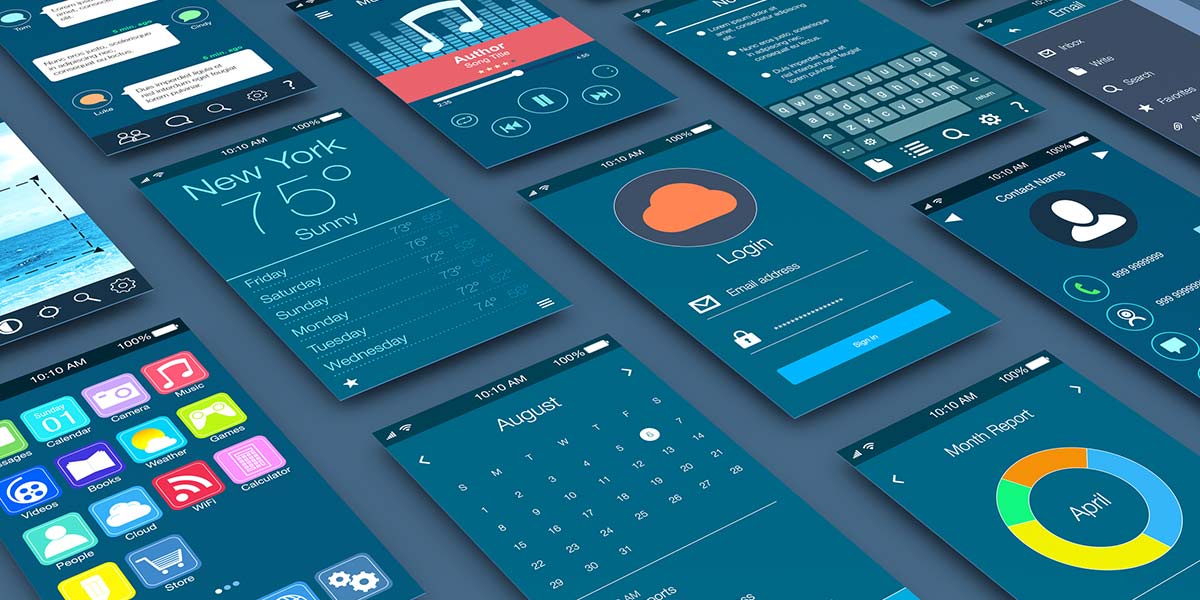
On the planet of modern computer software, consumer working experience no longer lives only on screens. More and more, it resides while in the invisible connections involving units—those streams of data and commands that make electronic ecosystems function. These connections are created possible by APIs (Software Programming Interfaces), that have progressed from technological resources for builders in the new frontiers of consumer interaction. Nowadays, APIs tend to be the unseen interfaces shaping how people working experience technology, even when they never contact a button. I'm Gustavo Woltmann, developer with twenty 12 months knowledge, let's Examine how meaninghul APIs are right now.
From Screens to Techniques
For decades, user interfaces had been defined by what users could see and contact—buttons, icons, menus, and screens. The artwork of consumer knowledge revolved all around building these visual layers intuitive and delightful. But as electronic ecosystems expanded, a silent revolution started beneath the surface. The most important interactions were being now not occurring among human beings and screens, but among applications and devices.
Enter the API—Application Programming Interface—the invisible backbone of recent application. As an alternative to guiding human clicks, APIs define how systems connect. They permit apps to share facts, bring about actions, and coordinate advanced duties immediately. During this new fact, the boundaries between platforms blur: your experience-sharing app connects to your map company, your weather conditions widget pulls info from the meteorological server, along with your fitness tracker syncs seamlessly with all your cellphone.
This behind-the-scenes connectivity has quietly redefined what “consumer encounter” suggests. Although buyers interact by way of a graphical interface, the legitimate expertise often is dependent upon how well APIs exchange information while in the history. A flawless transaction, immediate update, or authentic-time notification happens due to the fact APIs are working properly alongside one another.
Because of this, fashionable computer software progress is shifting its priorities. The Visible layer—the screen—continues to be significant, but it’s not The full Tale. The standard of the encounter now depends equally to the invisible architecture that powers it. Enterprises that once focused exclusively on UI layout at the moment are investing closely in API style, recognizing that reliability, pace, and integration generate buyer gratification about aesthetic appeal.
From screens to methods, engineering is now a lot less about what we see and more details on how all the things connects. The way forward for person experience is not just Visible—it’s structural, seamless, and run by the quiet intelligence of APIs working behind each tap, simply click, and swipe.
APIs as Invisible UX
In today’s related electronic earth, quite possibly the most seamless person activities typically come about with no end users acknowledging it. Powering each immediate login, one-simply click payment, or authentic-time update lies a community of APIs—the unseen interfaces that shape how technologies feels. While common style and design focuses on what customers can see, API design establishes how efficiently every little thing functions.
APIs are getting to be the invisible layer of person knowledge, orchestrating interactions across platforms and devices. Once your social websites app right away pulls your pics from your cloud or your banking app syncs beautifully with the budgeting computer software, you’re benefiting from considerate API layout. The responsiveness, reliability, and regularity of Individuals connections determine the overall experience up to visual style and design or navigation ever could.
Inadequately developed APIs, Conversely, can split that illusion of effortlessness. A gradual integration, mismatched info, or procedure failure generates friction just like a buggy interface would. That’s why a lot of leading firms now treat APIs as Main UX factors, not only backend applications. Their style ought to prioritize clarity, predictability, and stability—traits that ensure developers can Establish trustworthy capabilities, and customers can delight in flawless performance.
For modern builders, crafting a great API is surely an act of consumer-centered design—only the “end users” will often be other developers. Extensive documentation, reliable endpoints, and intuitive logic make APIs much easier to adopt and integrate, fostering superior close-user encounters.
In this way, APIs have redefined what this means to structure for usability. They turn interactions into fluid, connected encounters that transcend screens. As programs go on to speak much more immediately with each other, APIs are emerging as The brand new frontier of UX—just one where by probably the most gorgeous interface will be the one particular people hardly ever see.
The Increase of the API-First Globe
Prior to now, computer software was created Along with the consumer interface 1st—a display screen, a menu, a visible format—although the underlying methods came later. Today, that order has flipped. We now are now living in an API-to start with environment, where by apps are intended from The within out, starting with the data and logic that drive every conversation.
An API-initially technique suggests developers begin by defining how methods communicate right before they even Make the consumer-dealing with layers. This mentality makes certain that every single support—whether or not it’s authentication, payment processing, or analytics—can be reused, scaled, and built-in across numerous platforms. Instead of coming up with for an individual interface, businesses design for an ecosystem of connections.
The end result is agility and interoperability. Modern day businesses run across equipment, cloud companies, and third-bash integrations, and APIs make that complexity manageable. They permit startups to plug into world-wide infrastructures like Stripe, Google Maps, or OpenAI inside of several hours as an alternative to months. This accelerates innovation and ranges the actively playing area, enabling compact teams to build innovative products that rival company software.
For businesses, the shift to API-1st style isn’t just complex—it’s strategic. It encourages modular architecture, continuous shipping, and easier collaboration amongst groups. APIs grow to be the deal of communication amongst interior techniques and exterior partners, giving stability in an at any time-changing digital landscape.
In a very globe pushed by automation and connectivity, APIs are now not an afterthought—they’re the foundation. They electricity all the things from logistics networks to intelligent residences, reworking how software program is created, read more managed, and experienced. The rise on the API-to start with globe represents a elementary transform in how technology evolves: significantly less about screens and clicks, and more details on how just about every system talks, shares, and grows with each other.
Collaboration, Automation, and the New UX
As APIs just take Heart phase in fashionable software, they’re not only enabling engineering—they’re reshaping how men and women and devices collaborate. Within an API-pushed ecosystem, collaboration extends outside of groups and applications into the very architecture of digital products. APIs act as the bridges in between providers, automating workflows and producing encounters that come to feel easily linked.
Take into consideration how right now’s productivity resources function: your calendar syncs together with your video conferencing app, your messages result in challenge updates, plus your documents are routinely backed up across platforms. None of this happens manually—it’s powered by APIs Doing the job quietly during the qualifications. This invisible collaboration provides rise to a new style of consumer knowledge, one that values automation and integration over common interface style and design.
For developers and item groups, APIs also redefine collaboration internally. In place of siloed techniques, teams do the job from the shared foundation of reusable factors. Designers, engineers, and analysts can Create and refine items simultaneously, working with APIs since the connective tissue that keeps anything aligned and steady. This modular method hastens iteration, lowers redundancy, and tends to make products and solutions far more adaptable to change.
With the consumer’s standpoint, the top electronic encounters are those that anticipate needs and take away friction. APIs make that possible by enabling true-time information stream and automation—regardless of whether it’s good suggestions, prompt payments, or contextual notifications.
Inside the period of collaborative automation, the user knowledge is no longer confined into a monitor or just one software. It life inside the seamless coordination concerning techniques. APIs tend to be the unseen collaborators, empowering humans and devices to operate in sync. The new UX just isn't pretty much designing interfaces—it’s about planning interactions concerning ecosystems, exactly where automation and collaboration outline what “person-friendly” genuinely suggests.
Designing the Future of Invisible Interfaces
As APIs continue on to weave together the digital entire world, They are really paving the way for any foreseeable future where by interfaces might disappear entirely. The subsequent technology of person working experience won’t depend on screens or buttons—it is going to rely upon seamless, context-knowledgeable interactions made feasible by intelligent, interconnected techniques driven by APIs.
Invisible interfaces are previously below in refined varieties: a voice command that orders groceries, a smartwatch that adjusts your thermostat, or an application that implies the most beneficial route prior to deciding to even ask. These experiences are built not on conventional style factors but on info movement, automation, and integration—all orchestrated by means of APIs.
Developing for this potential needs a shift in considering. Rather than focusing on what users see, designers and builders ought to look at how devices fully grasp and reply. The emphasis moves from visual layout to behavioral logic—crafting interactions that are anticipatory, purely natural, and trusted. Prosperous API layout will copyright on clarity, safety, and adaptability, ensuring that invisible interactions remain trusted and respectful of consumer intent.
This shift also redefines creative imagination in know-how. The designers of tomorrow will form ecosystems, not just ordeals. They’ll will need to think about how different products and services, sensors, and knowledge sources collaborate to form a unified, human-centered process.
On this globe, APIs come to be the architects of invisibility. They empower frictionless, predictive experiences where by the interface fades away and the conversation itself results in being the merchandise. As we move towards ambient computing, intelligent environments, and AI-pushed personalization, the future of person expertise received’t be what we touch—it will be what seamlessly takes place for us, powered because of the silent design and style of APIs.
Summary: The Peaceful Ability Powering the Monitor
APIs have redefined what it means to communicate with technologies. They might not have buttons or colors, Nevertheless they condition how digital activities feel—clean, related, and quick. Within an increasingly interconnected entire world, the API is now not only a developer’s Resource. It’s The brand new user interface, quietly reworking how we Are living, perform, and join within the digital age.